The earliest galaxies detected by JWST
A New Timeline for Early Galaxy Formation
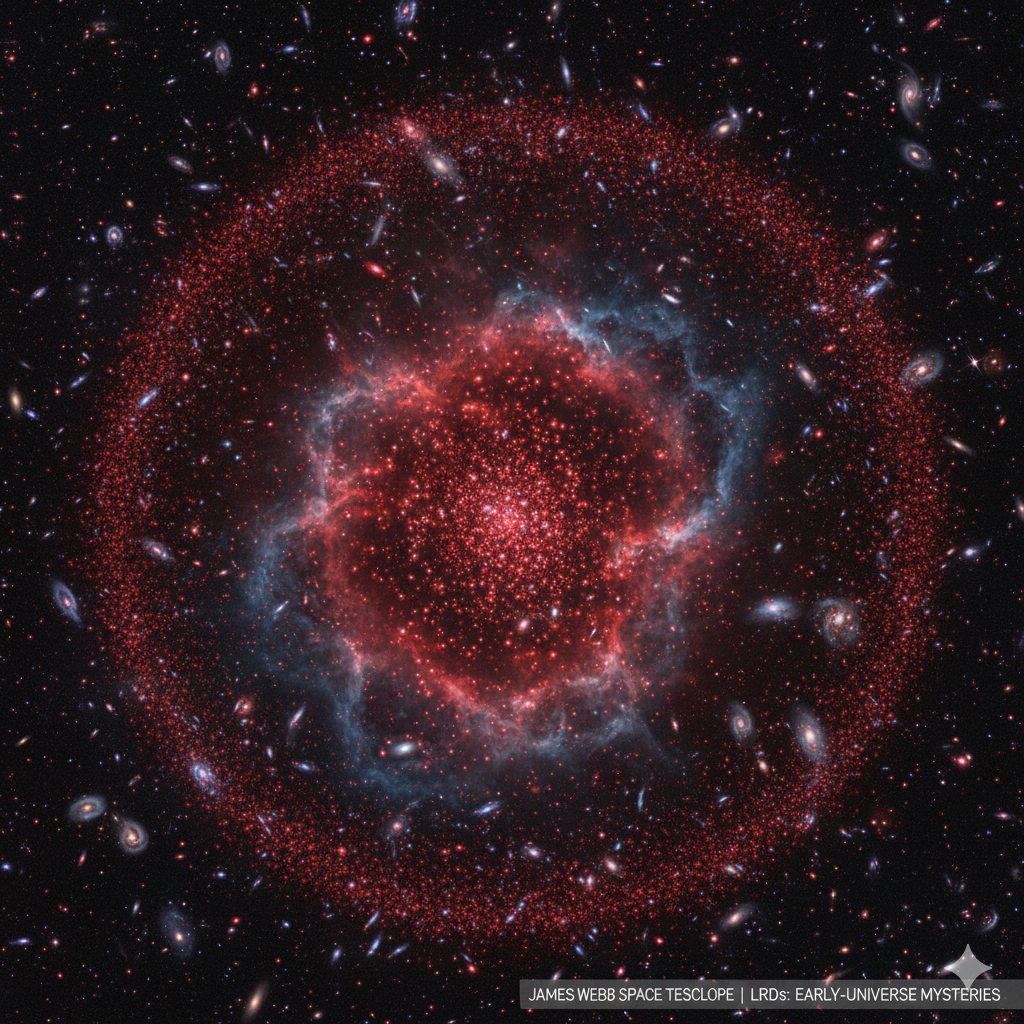
The discovery of the earliest galaxies detected by JWST fundamentally changes how scientists interpret the timeline of cosmic evolution. Traditionally, cosmologists believed that the first fully developed galaxies took hundreds of millions of years to assemble, gradually building up stars, dust, and heavier elements through slow processes of gravitational accumulation. However, JWST’s detection of bright, massive early-epoch galaxies—existing when the Universe was less than 300 million years old—reveals that star formation must have begun almost immediately after the Big Bang. These galaxies display surprisingly mature characteristics such as active star-forming regions, structured halos, and even signs of evolved chemical elements, indicating that multiple generations of stars lived and died quickly to enrich their environments. This means that the cosmic timeline for stellar life cycles is significantly faster than what long-standing theoretical models predicted.
Rewriting the Epoch of Reionization
In addition to accelerating our understanding of galaxy formation, these ancient galaxies are reshaping the narrative of how the early Universe transformed from a dense fog of neutral hydrogen into a transparent, light-filled space. Astronomers believe that these early galaxies drove the Epoch of Reionization—a dramatic transitional period during which high-energy ultraviolet light escaped into the intergalactic medium and separated electrons from hydrogen atoms. Previously, models suggested that reionization might require vast numbers of galaxies or many millions of years of cumulative energy. Yet JWST’s images show that even a relatively small number of strong star-forming galaxies could have produced enough radiation to ionize regions of space early and rapidly. As researchers continue to map their distribution, it appears that cosmic structures formed through overlapping ionized “bubbles” that eventually merged to make the Universe transparent.
Evidence of Rapid Star Cycles in Infant Galaxies
Even more astonishing is the fact that these galaxies show signs of heavy-element presence, meaning that stars lived brief, intense lives and exploded as supernovae very quickly—some within just a few tens of millions of years. Heavy elements like oxygen, carbon, or silicon do not originate from the Big Bang; they are produced inside stars. The fact that JWST can detect such chemical fingerprints implies that massive first-generation stars—often called Population III stars—formed earlier than expected and burned hot enough to leave behind chemically rich remnants. These early explosions seeded surrounding space, enabling the formation of cooler, denser material that later burst into additional star-forming cycles. This greatly increases the complexity of early galactic structures and challenges assumptions about the pace of chemical evolution.
Challenging the Standard Model of Galaxy Formation
Ultimately, the earliest galaxies detected by JWST have introduced tension into modern astrophysical frameworks, pushing scientists to revise existing simulations. Many models struggle to explain how young galaxies achieved such size, stability, and brightness so rapidly. As a result, JWST findings are forcing researchers to reconsider galaxy-formation physics, dark-matter behavior, gas cooling speeds, and even fundamental cosmological assumptions. These galaxies are not distant smudges—they are active agents in rewriting the cosmic origin story. Each deep-field observation reveals new details, showing that the Universe evolved far more dynamically and dramatically than previously believed, making JWST’s discoveries among the most transformative achievements in space science.